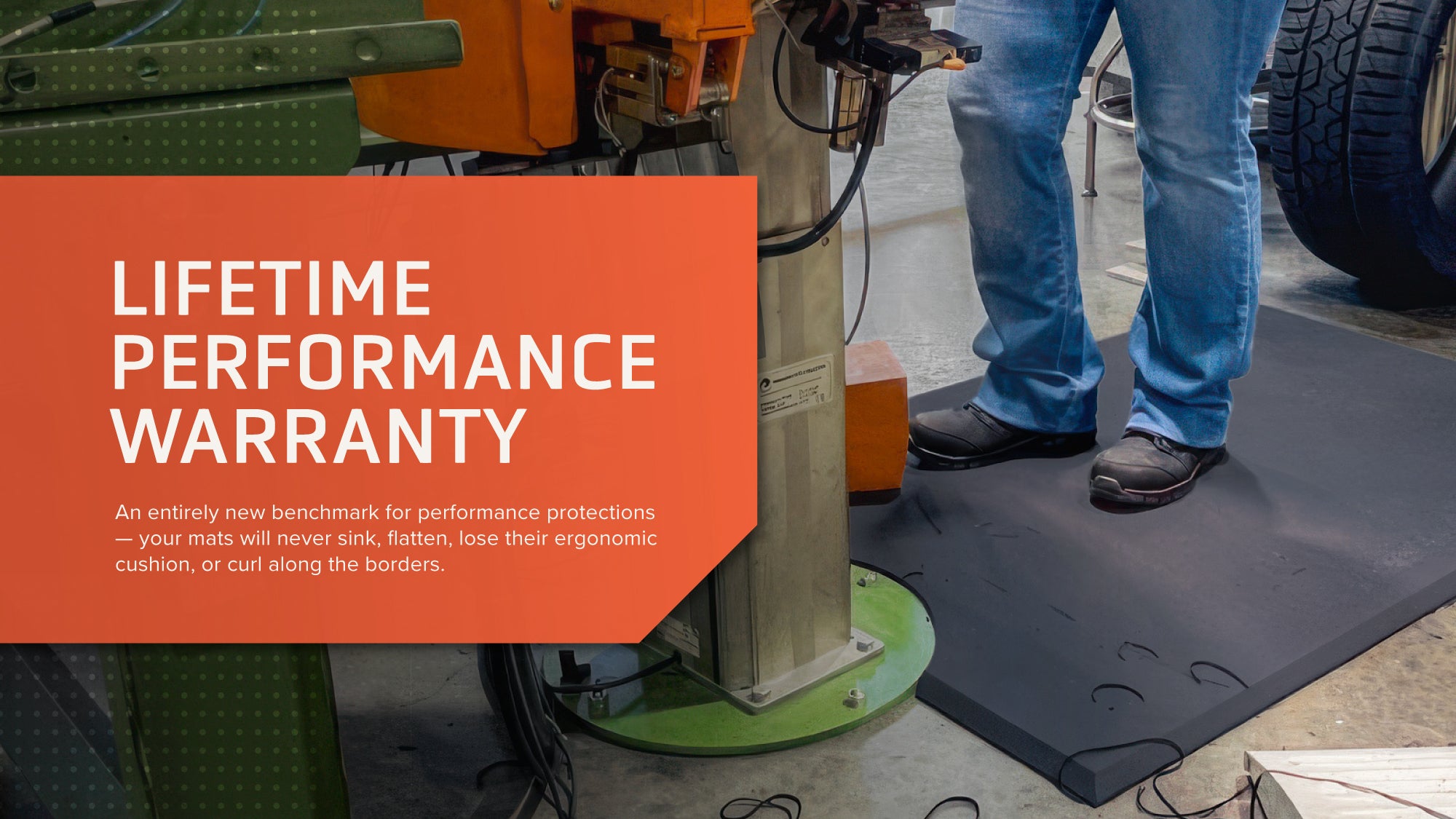



What do organizations expect from an industrial anti-fatigue mat? How are they managing their mats once in use? Are your anti-fatigue mats meeting performance expectations?
Despite the widespread use of anti-fatigue mats in manufacturing, distribution, food processing, and other industrial environments, there's relatively little research addressing these kinds of questions. To help fill this gap, we surveyed 138 U.S.-based professionals across EHS, manufacturing engineering, continuous improvement, and operations.
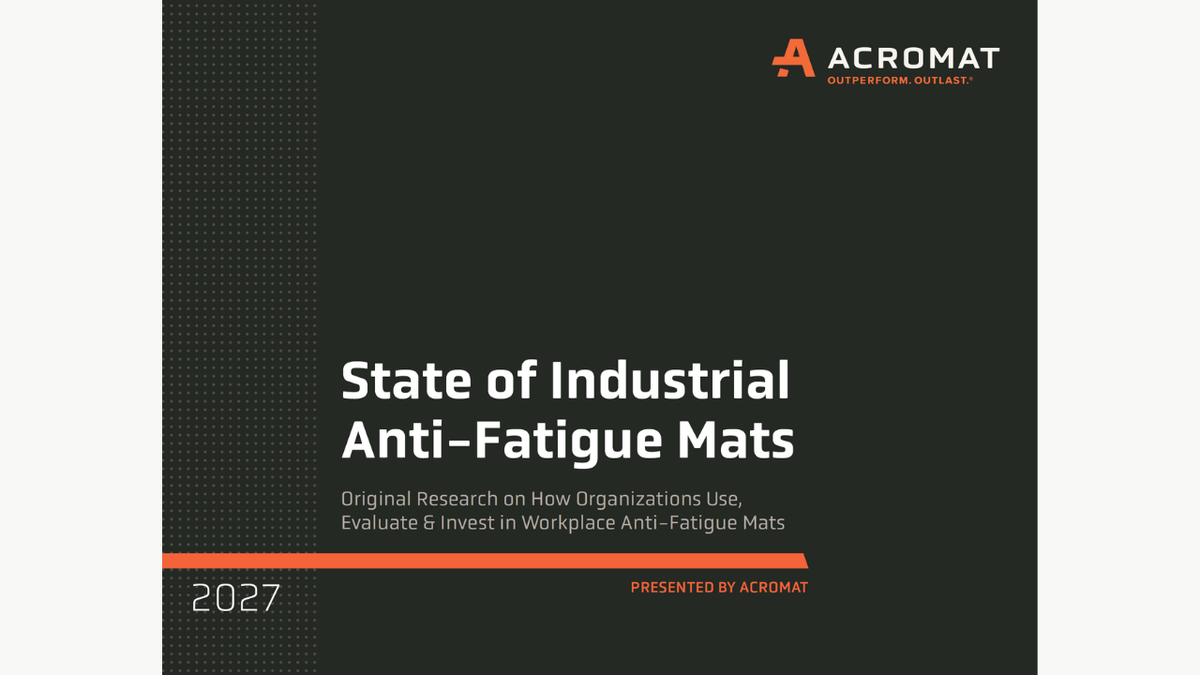
This data is presented in our inaugural 2027 State of Industrial Anti-Fatigue Mats Report.
Below, we highlight key findings, including two important themes that emerged from the data: the Performance Gap and the Management Gap. Specifically, there is a disconnect between what organizations expect from their mats and how they actually perform, as well as between the importance organizations place on anti-fatigue mats and how they manage them.

Access your complimentary copy of the 2027 State of Industrial Anti-Fatigue Mats report, created and presented by AcroMat, through the link above.
1. The Performance Gap: High Expectations, Low Return
In brief, the Performance Gap means organizations are expressing high expectations for how they feel anti-fatigue mats should perform, but their experiences with anti-fatigue mats aren't matching their expectations.
When asked what respondents expect from an industrial anti-fatigue mat:
- 90% of respondents expect comfort.
- 88% expect durability and longevity.
- 76% expect traction and slip resistance.
- 64% expect custom sizing or fit options.
Yet, respondents' experiences with their current mats tell a different story:
- 68% of respondents have experienced curling edges or borders.
- 64% have experienced mats flattening or losing cushioning.
- 61% have experienced mats sliding.
- 40% have experienced constant replacement due to poor longevity.
When asked to identify their single biggest frustration with anti-fatigue mats, 29% said curling, 24% said sliding, and 18% said flattening or loss of cushion. Together, these issues account for 71% of respondents' biggest frustrations with anti-fatigue mats in use today.
The Performance Gap isn't about expecting mats to last forever. Like tires on a vehicle, all mats age and eventually need to be replaced. Rather, it's about whether they are performing while in use and whether they are delivering on what mat providers have promised (e.g., non-curling) your company during the researching and buying process.

Curling, sliding, and flattening account for 71% of survey respondents' biggest frustrations with the anti-fatigue mats in use today.
2. The Management Gap: Important Equipment, Informal Processes
The second major finding may be even more revealing. 90% of respondents consider anti-fatigue mats either a strategic investment or important ergonomic equipment, yet only 36% have a formal standard for selecting and ordering them.
For comparison, 81% have formal standards for other workplace equipment or personal protective equipment (PPE). That's a gap of 45 percentage points.
Why does this matter?
Without consistent standards, purchasing and replacement decisions can differ across workstations, departments, and facilities. Different employees may order different products for similar applications, leading to inconsistent performance, a random assortment of mats filling a workspace, and reactive decision making rather than a strategic approach. And once anti-fatigue mats are installed, there's likely little consistency in how they're evaluated.
Our research also found that:
- 47% have no formal schedule for inspecting or reviewing their anti-fatigue mats.
-
28% rely on employees to report when they feel their mats need replacing.
- 18% replace mats only after a failure or injury or close call.
Just 34% of respondents say they proactively evaluate and replace their anti-fatigue mats.
These findings reveal that companies believe anti-fatigue mats play a strategic role in areas like health, safety, and employee engagement, but their buying, maintenance, and review processes show they may not be managing them accordingly. Without formal processes in place, it's much more difficult to understand how and why anti-fatigue mats are performing a certain way, as well as how your people feel about them.

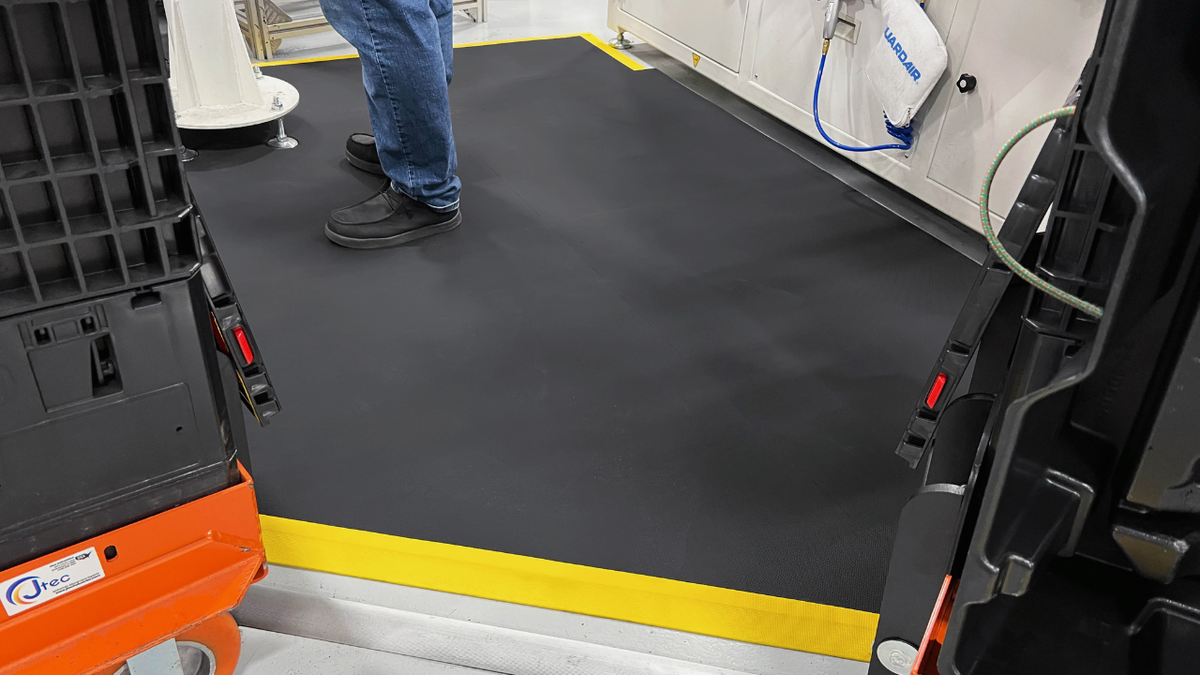
AcroMat 100-1 Series mat. 90% of respondents consider anti-fatigue mats either a strategic investment or important ergonomic equipment. Yet, only 36% have a formal standard for selecting and ordering them, and only 34% proactively inspect them once they are in use.
3. What Organizations With Formal Standards Do Differently
Our research also examined how management practices differ between organizations with and without formal anti-fatigue mat standards. The differences were notable. Specifically, those with formal standards in place were more proactive across the board and also reported greater satisfaction with their mats.
Among respondents with formal anti-fatigue standards in place:
- 57% proactively evaluate and replace their mats, compared with 24% without standards.
- 79% have a defined inspection or review schedule, compared with 38% without standards.
- 70% include anti-fatigue mats when planning workstations or production lines, compared with 37% without standards.
Respondents with formal standards also reported higher satisfaction with how their anti-fatigue mats are performing: 7.53 out of 10, compared with 6.38 among those without standards.
While these findings don't definitively establish that a formal standard will solve all anti-fatigue mat challenges, they do demonstrate a consistent relationship between structured anti-fatigue mat ordering, management, and review practices and overall satisfaction with their mats.

Respondents with formal standards report higher average satisfaction with their anti-fatigue mats (7.53 out of 10), compared with 6.38 among those without standards.
4. Closing the Gaps: A More Proactive Approach
Our findings suggest that improving anti-fatigue mat performance and management doesn't necessarily require a larger budget or replacing every mat currently in use. Rather, improvement starts with taking a closer look at what's already on the floor.
Organizations can begin by evaluating mat condition, identifying recurring performance problems, and establishing minimum requirements for future purchases (e.g., yellow safety borders, shape/size requirements, and warranty protections). Regular inspections can help identify curling borders, sliding, loss of cushion, damaged surfaces, and poor workstation fit before they become more serious concerns.
Custom sizing matters too. Our survey found that 61% of respondents frequently or sometimes observe employees stepping on and off mats because of incorrect shape or size, while 69% observe multiple mats pieced together to cover a single workstation.
These findings reinforce the importance survey respondents place on evaluating not only mat condition, but also whether mats actually fit the workspaces they are being used in.

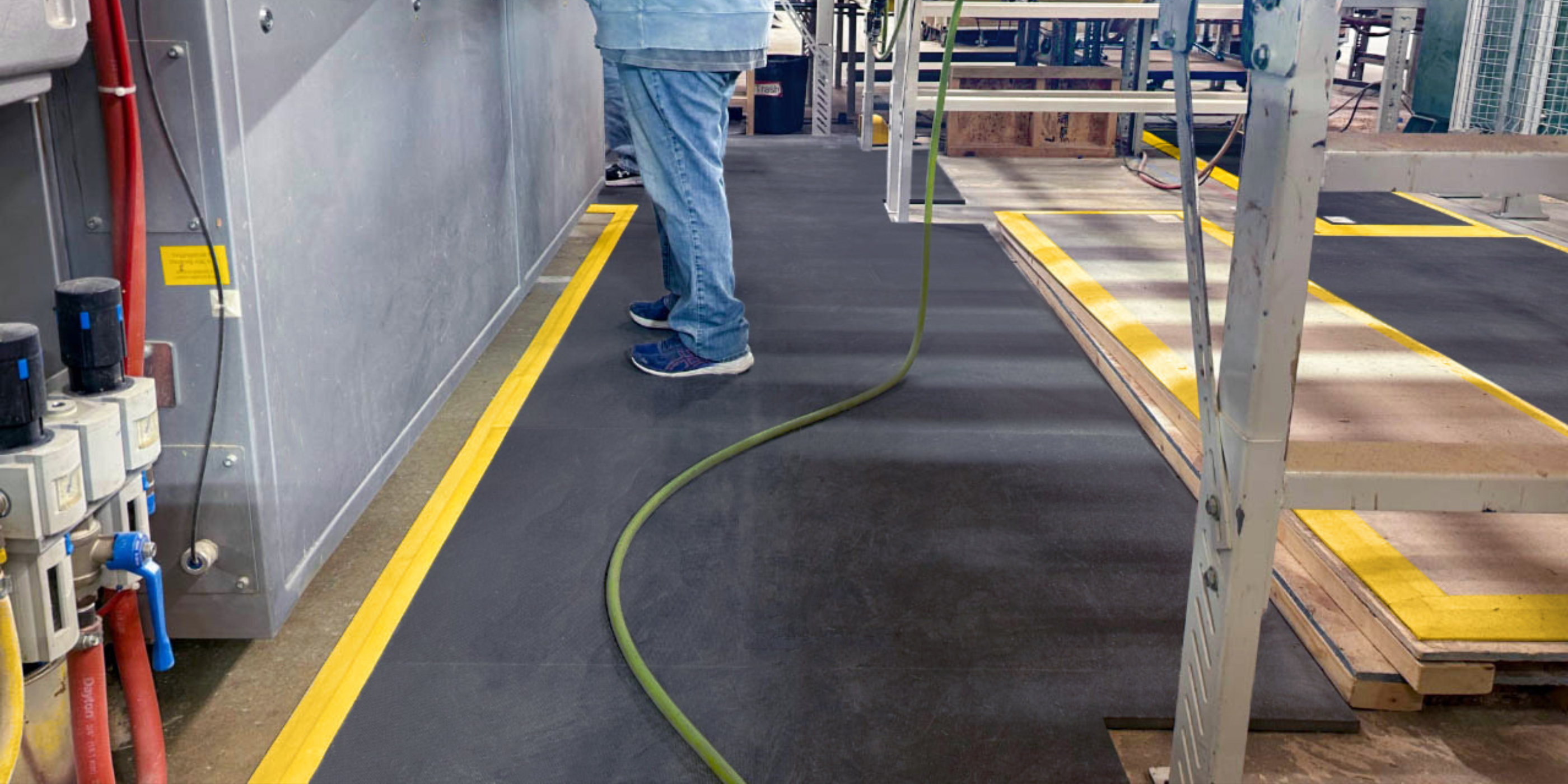
Customized AcroMat 100-1 Series mat. 64% of respondents say, for an anti-fatigue mat to be considered "high quality," it needs to be able to be customized to a precise shape and/or size.
Related: When Should You Inspect Your Anti-Fatigue Mats? (And What to Look For)
5. Anti-Fatigue Mats Are More Than a Facility Purchase
One other finding deserves attention: 94% of respondents agree that providing quality anti-fatigue mats demonstrates a company's investment in employee well-being.
These responses suggest that anti-fatigue mats represent more than a basic facility purchase. Whether PPE, modular tiles, insoles, ergonomic chairs, or anti-fatigue mats, the equipment companies provide to employees sends a message to them about their value.
Closing the Performance Gap and Management Gap starts with more than simply calling anti-fatigue mats a strategic investment, but actually treating them this way in terms of purchase, maintenance, and inspection.

More than 9 in 10 survey respondents agree that providing quality anti-fatigue mats demonstrates a company's investment in employee well-being and can influence an employee's perception of their employer.
6. Access the 2027 State of Industrial Anti-Fatigue Mats Report
These findings are a small selection of the data featured in our 2027 State of Industrial Anti-Fatigue Mats Report. The 20-page report features 4,554 data points exploring how organizations select, evaluate, and manage anti-fatigue mats. It includes common performance challenges, purchasing practices, inspection processes, and opportunities for improvement.
The report also includes five practical recommendations for organizations looking to establish more consistent, proactive approaches to anti-fatigue mat management. Access your complimentary copy at the link in the intro!
About the Author: Rich Ward
Rich leads the AcroMat marketing team, supports R&D, and led the surveying and report writing process for our 2027 State of Industrial Anti-Fatigue Mats report. His focus is on providing clear, honest, and highly researched information to help our customers make confident buying decisions. You’ll often find Rich on industrial podcasts, LinkedIn and other channels sharing the anti-fatigue mat insights and practical tips he learns from meeting with AcroMat customers as well as researching and testing our products.